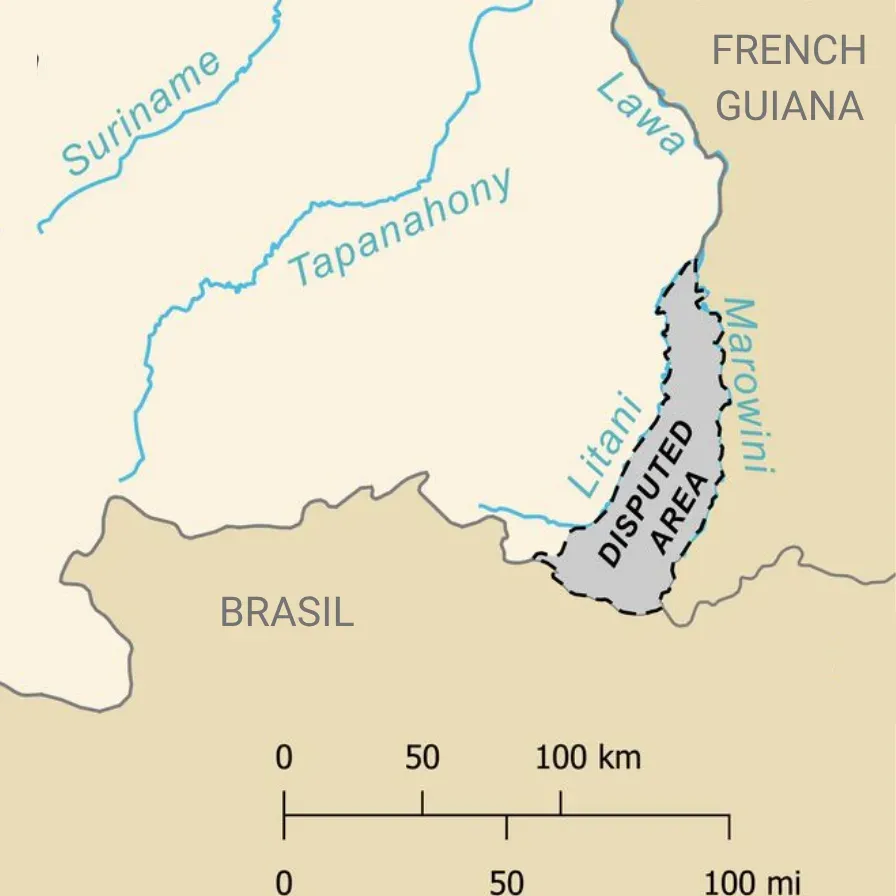
Historical Arbitration
In the 19th century, disagreement arose over the borderline. The stakes were the territory between the Lawa and the Tapanahony. The discovery of gold in 1885 made a final decision urgent.
"The Tsar concluded that the Lawa was the main branch of the river, a crucial victory for Surinamese sovereignty."
The Litani Issue: A Timeline
From first explorations to modern protocols.
1861
Joint Commission
French and Dutch experts measure river flows. The Lawa proves larger than the Tapanahony.
Significance: The first scientific basis for the borderline.
1885
Gold Rush
The discovery of gold between the Lawa and Tapanahony increases tensions.
Significance: Economic interests make rapid boundary settlement essential.
1891
Arbitration by the Tsar
Czar Alexander III awards the territory to the Netherlands (Suriname).
Significance: A monumental diplomatic victory for Suriname.
1915
Lawa Border Treaty
The Netherlands and France officially fix the border on the Lawa.
Significance: Legal closure of the first major dispute.
2021
Modern Protocol
France and Suriname reach agreement on part of the borderline.
Significance: A step towards modern border management, though the source triangle remains disputed.
Our Stance:
"Territorial integrity in the southeast is inextricably linked to the historical recognition of the Lawa and its extension."
Consulted Sources
Arbitral Award Tsar Alexander III (1891)
The full verdict designating the Lawa as the border river.
1915 Border Treaty
Formal ratification of the arbitration between the Netherlands and France.
2021 Protocol
The most recent agreement on the lower course of the Maroni.
National Archives of Suriname
Documents regarding the boundary commissions of 1860 and later.